5 Warning Signs Your Roof Needs Urgent Repair | Cambridge Roofers
Published by City Roofing Repairs | Cambridge, Cambridgeshire
Most homeowners across Cambridgeshire don't think about their pitched or flat roofs until something goes wrong. Unfortunately, by the time you notice a problem from inside your house, the structural damage has usually been developing silently for weeks or even months.
The good news is that roofs almost always give warning signs before a small leak turns into an expensive, full-scale roof replacement. Knowing what to look for and acting on it quickly can save you hundreds or even thousands of pounds in structural repairs.
If you notice any of the following five warning signs, your property requires professional attention from a trusted local roofer sooner rather than later.
1. Damp Patches or Stains on Ceilings and Walls
This is the indicator most people notice first. However, by the time water marks show up on your ceiling plasterboard, moisture has already penetrated your external roof covering, bypassed the protective roof felt or membrane beneath, and potentially compromised the timber rafter structure.
What it looks like: Brown, rusty, or yellowish stains on upstairs ceilings, dark damp patches on walls near the roofline, or peeling paint in upstairs bedrooms. You may also notice dark mould growth forming around the edges of the stain.
What it means: Water is actively breaching your roof system. Note that a stain on the ceiling isn't always directly below the external leak location water frequently travels along rafters and internal timbers before dripping down, meaning the entry point could be metres away.
Why it's urgent: The longer moisture sits in your roof structure, the worse the secondary damage becomes. Timber rots, attic insulation loses its thermal efficiency, and plasterboard structurally degrades. What starts as a simple cracked tile can rapidly spiral into rotten rafters and structural ceiling failure.
What to do: Do not ignore the mark and assume it has dried out during summer or dry spells. The underlying fault remains and will leak again during the next heavy Cambridgeshire rainfall. Book a professional roof repair inspection to trace and seal the exact source of water ingress.
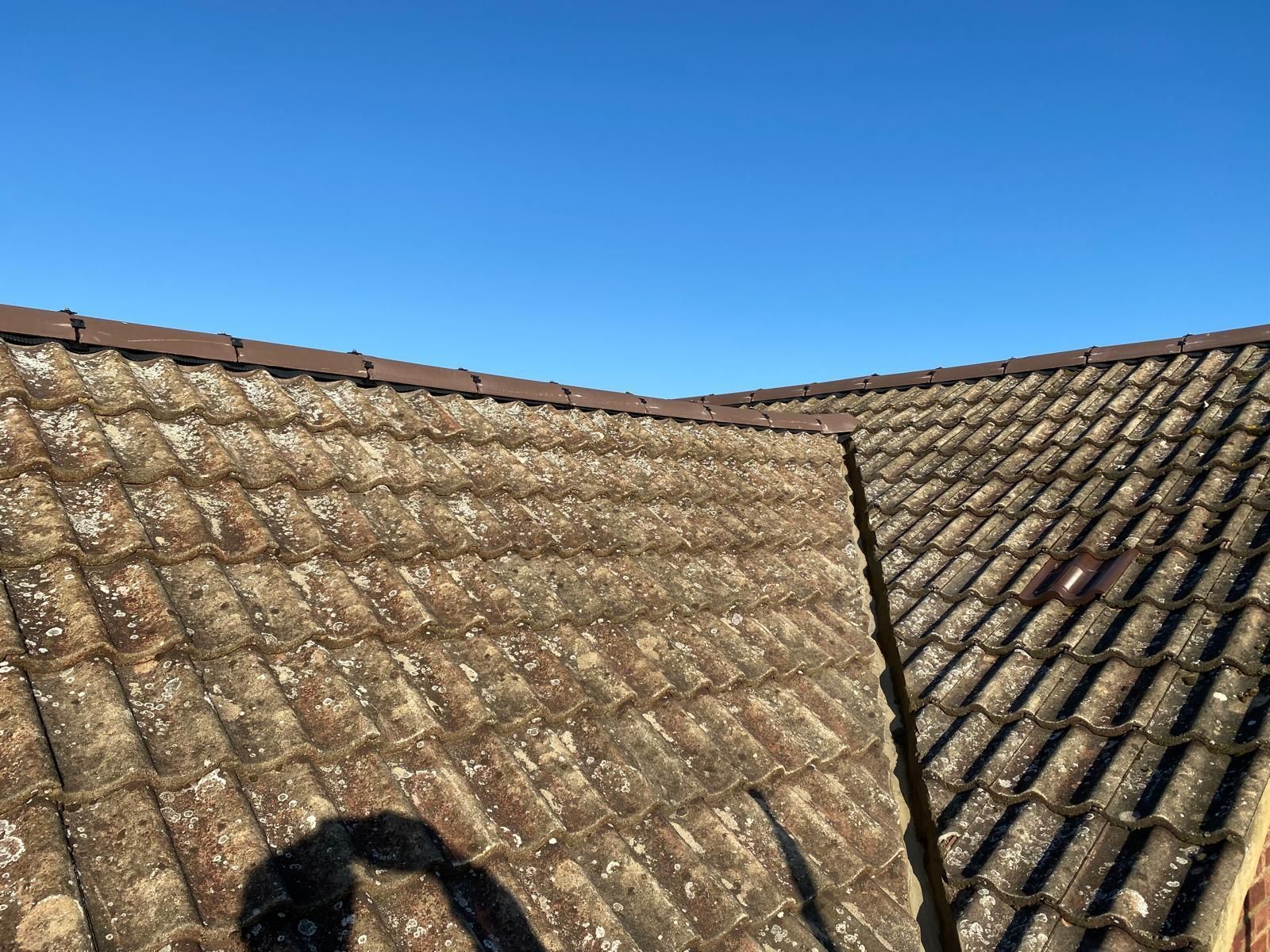
2. Slipped, Cracked, or Missing Tiles and Slates
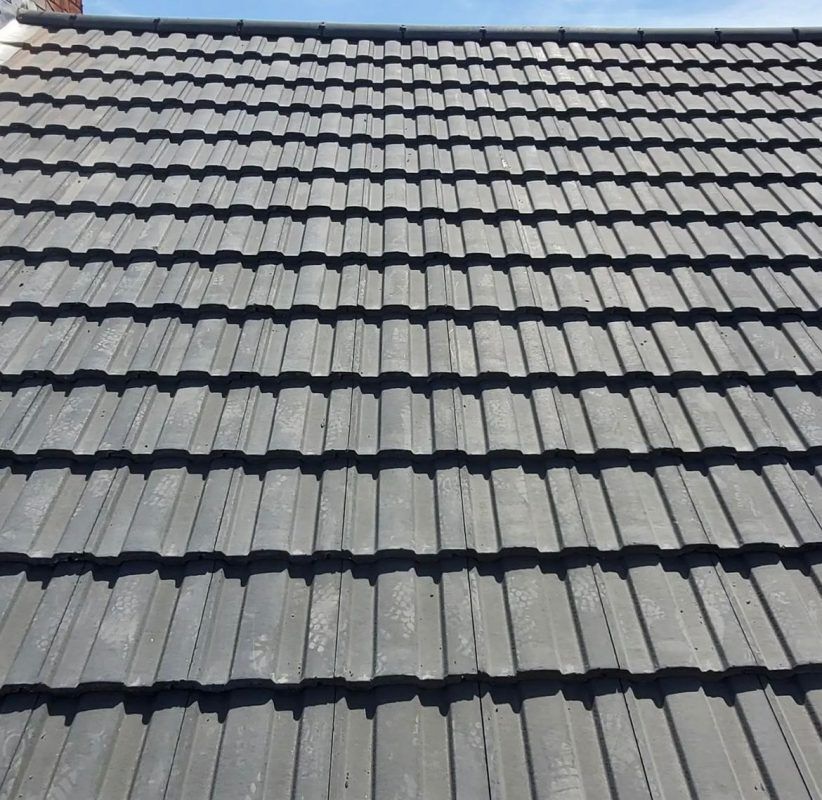
You rarely need to climb up a ladder to spot this issue. From ground level, look up at your roof lines from multiple angles such as your front garden, across the street, or from a back bedroom window to spot disruptions in the uniform layout.
What it looks like:
Clear gaps where individual roof tiles should be, slates that have slipped out of line, cracked or broken pieces, or fragments of clay tile sitting in your gutters or down on the patio after a storm. On traditional slate roofs, look out for slates sitting at awkward, crooked angles.
What it means: Your outermost waterproof barrier has been breached. Every missing or broken slate is a direct open pathway for rain. If multiple tiles are slipping, the original fixings (such as nails or clips) are likely failing due to age, meaning more are prone to slide off soon.
Why it's urgent: A single missing tile might not cause an immediate internal drip if your underlying breathable roof felt is intact. However, roofing felt degrades quickly when exposed to UV light and wind. Multiple gaps allow large volumes of water to overwhelm the felt during a downpour, causing rapid timber damage.
What to do: Replacing a handful of slipped slates or tiles is a quick, highly affordable maintenance task. Leaving it unaddressed until the timber rots or the ceiling collapses will dramatically increase your eventual roof repair costs. Get a local roofer to check the secure fixings across the rest of the pitch.
3. Damaged or Deteriorating Flashing
Flashing is the protective material typically lead used by professional roofers to seal the vulnerable joints where your roof intersects with a vertical surface, such as a brick wall, chimney stack, dormer window, or valley junction. It is one of the most common causes of residential water leaks.
What it looks like:
Lifted, warped, or split sections of lead along your chimney base or wall joints. Lead sheets that have physically pulled away from the mortar lines of the brickwork, or cracked cement fillets where proper lead installations were bypassed.
What it means: The weatherproof seal at a critical structural junction has failed. Rainwater is now sliding behind the flashing layer and running directly into your home's internal frameworks. Chimney flashing failures are exceptionally common across older properties in Cambridge, Huntingdon, and St Ives.
Why it's urgent: Flashing faults never self-correct. High winds will continue to lift the loose metal, driving rain will wash out the remaining mortar pointing, and moisture will silently rot the timbers deep behind the scenes where you cannot visually track it.
What to do: If you notice any leadwork that appears buckled, detached, or split, request an expert assessment. Remedying or renewing localized lead flashing is straightforward, but repairing the hidden internal water damage it prevents is far more invasive.
4. Sagging or Uneven Roof Line
Take a step back from your property and carefully assess the ridge line (the very top peak) and the overall flat plane of your roof slopes. It should present a straight, level, and completely uniform alignment.
What it looks like:
A visible dip, curve, or sag in the main ridge line. An isolated area of the roof surface that appears to bow inwards or bulge outwards, or tiles that look warped compared to the rest of the slope.
What it means: This is a clear indicator of structural movement or failure. The most frequent cause is weakened, damp-ridden, or rotten timber rafter support structures that can no longer bear the heavy weight of the tiles. It can also point to historic subsidence or inadequate structural bracing.
Why it's urgent: This is the most critical of the five warning signs. A sagging roof line will not stabilize on its own; it will progressively worsen under wind and snow loads, risking localized collapse. The distortion opens up massive gaps between tiles, accelerating water entry and threatening the safety of the entire home.
What to do: If your roof line shows signs of bending or sagging, contact an experienced specialist immediately for an emergency roof repair assessment. Avoid entering the loft space yourself to inspect it leave structural structural assessments safely to insured professionals.
5. Blocked, Overflowing, or Damaged Gutters
While rainwater gutters are technically external attachments rather than a component of the roof structure itself, they are absolutely vital for its protection. When your guttering system fails, rainwater backs up and overflows directly onto your roofline timbers and external walls.
What it looks like: Water visibly cascading over the front or back edges of the guttering during a downpour. Distinct green algae or damp moss streaks running down your external brickwork. Plastic gutters sagging down or pulling completely away from the wooden fascia boards.
What it means: Your gutters are completely choked with moss and debris, cracked across a joint, or the supporting bracket clips have failed under heavy weight. Instead of being channelled safely down to the drains, water is soaking directly into your fascia boards and foundations.
Why it's urgent: Gutter damage is intensely cumulative. Constant water overflow rots the wooden fascia and soffit boards that support the bottom edge of your roof tiles. Over time, this moisture migrates horizontally into your internal wall cavities, resulting in severe rising or penetrating damp issues.
What to do: Regular gutter maintenance and clearing from a qualified professional roofer is a quick, low-cost solution. If your systems are physically split, warped, or broken, upgrading to modern, low-maintenance uPVC guttering is far more cost-effective than remediating deep damp problems inside your living spaces.
Spotted a Problem? Book Your Free Roof Inspection Today
Roof faults never fix themselves they slowly and steadily worsen with every passing rainstorm. The quicker you diagnose a minor leak, the simpler, safer, and cheaper the final repair bill will be.
At City Roofing Repairs, we provide completely transparent, comprehensive roof inspections across Cambridge, Huntingdon, St Ives, and the surrounding Cambridgeshire regions. Joseph will personally assess your pitched or flat roof condition, explain his findings clearly without complex jargon, and offer honest, expert advice on what requires fixing and what can wait.
Call now: 01223 420691
Contact us via our online form and a member of our team will call you back within 30 minutes during business hours.
Learn More About Standards: For official advice on property safety and building regulations regarding structural renovations, check the UK Government's official portal on
UK Building Regulations
for Roofs.
Free inspection, no obligation: Entirely complimentary, with zero obligation or pressure.
Honest advice, we don't invent work: We strictly quote for necessary work, no fabricated faults.
Clear written quotes, no hidden costs: Completely transparent pricing breakdowns with no hidden fees.
Fully Covered Areas: Serving Cambridge, Huntingdon, St Ives, Ely, Newmarket, St Neots, Bury St Edmunds, and all surrounding villages.
Recent Posts